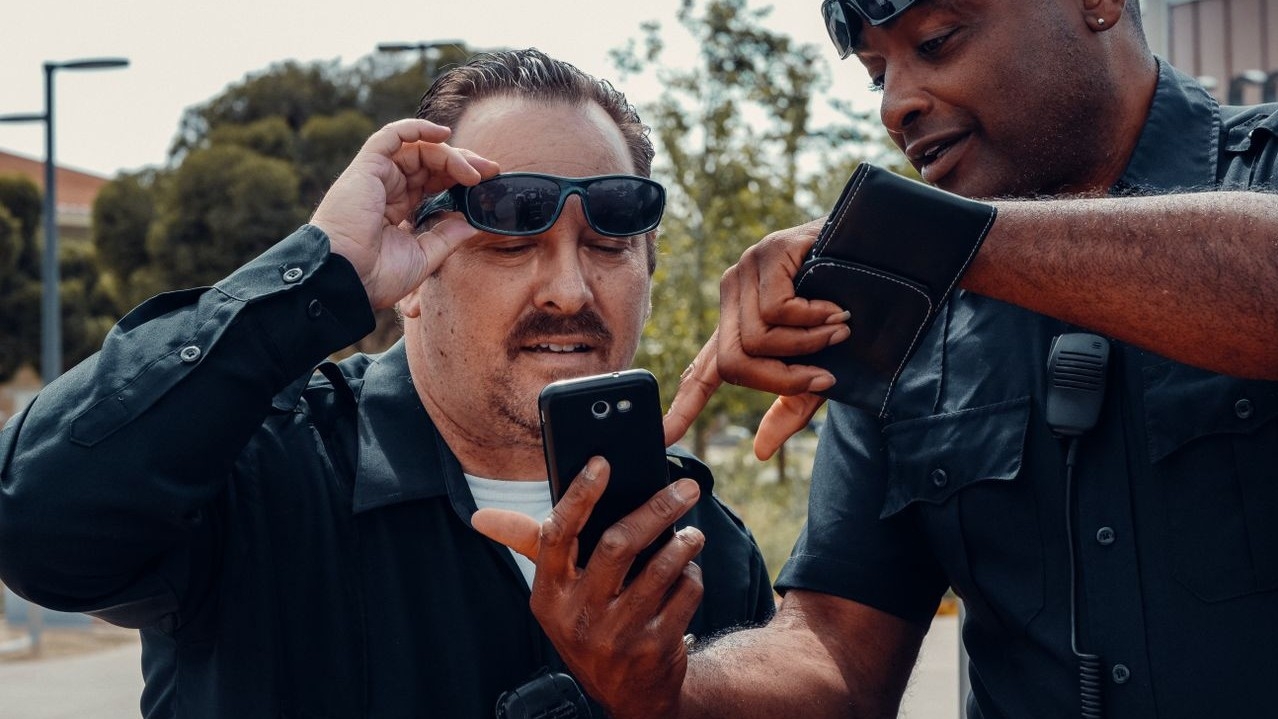
You are arrested, and the police take your phone. It may contain years of text messages, photos, emails, search history, social media activity, location information, and conversations that have nothing to do with the reason you were arrested.
Does the fact that officers have your phone mean they can start going through everything on it?
Generally, no.
Police can sometimes lawfully seize a phone during an arrest or investigation, but taking possession of the device and searching its digital contents are separate legal questions. The U.S. Supreme Court has held that police generally need a warrant before searching the digital information on a cellphone seized from someone who has been arrested, subject to recognized exceptions to the warrant requirement.
If you are facing a criminal investigation in New Jersey, another question can be just as important: even when police obtain a warrant, what does that warrant actually authorize them to search?
Does an Arrest Automatically Allow Police to Search Your Phone?
No.
A lawful arrest can allow police to search certain physical items in some circumstances, but a modern smartphone is different because it can hold an enormous amount of private digital information.
In Riley v. California, the U.S. Supreme Court held that the traditional search-incident-to-arrest rule does not generally allow police to search the digital contents of a cellphone without first obtaining a warrant.
In other words, the arrest itself does not generally give officers authority to start browsing through the phone’s digital contents.
Can Police Take Your Phone Without Immediately Searching It?
Yes, depending on the circumstances.
This is where people often confuse two separate events.
- Seizing a phone means law enforcement takes possession of the physical device.
- Searching the phone means examining the digital data it contains.
Police can lawfully secure or seize a phone in some circumstances while seeking judicial authorization to search its digital contents. The fact that officers have possession of the phone, therefore, does not necessarily mean a search of its digital contents has already been authorized.
If investigators later seek a warrant, they generally must present facts establishing probable cause to a judge.
But obtaining a warrant does not necessarily answer every question about the search.
Does a Search Warrant Let Police Look at Everything on the Phone?
Not automatically.
A search warrant must satisfy constitutional requirements, including probable cause and particularity. In practical terms, police need a sufficient legal basis for the search, and the warrant must adequately identify the place to be searched and the evidence or information they are authorized to seek.
That distinction becomes especially important when a warrant authorizes a broad search of a smartphone.
In the published 2023 decision State v. Missak, the New Jersey Appellate Division held that probable cause to believe some evidence of criminal activity could be found on a phone did not, by itself, justify searching all of the phone’s data. The court emphasized that the search should be tied to the particular information for which probable cause had been established.
The Missak litigation has continued. After the State obtained a second warrant authorizing another search of the phone’s entire contents, the Appellate Division again found the State had not established probable cause for such a broad search. The New Jersey Supreme Court is now reviewing that later warrant.
For someone facing charges, the practical point is straightforward: a warrant does not necessarily give police unlimited access to every category of data stored on the phone.
Why Do the Type of Data and Time Period Matter?
Suppose police are investigating text messages allegedly exchanged over several days.
If the facts supporting the warrant relate to particular messages, apps, contacts, dates, or activity, a separate question is whether there is also a sufficient basis to search completely different categories of data or information from months or years earlier.
That does not mean every cellphone warrant must contain identical limits. The scope depends on the facts of the investigation and the evidence supporting the warrant.
But when courts evaluate cellphone searches, the connection between the alleged offense, the information police expect to find, and the areas of the phone they want to examine can matter.
Mark H. Jaffe Attorney At Law can compare the warrant application and the scope of the authorized search with what officers actually examined to help assess whether law enforcement stayed within the legal authority it relied on.
What if You Gave Police Permission to Look at Your Phone?
A warrant is not the only legal issue that can arise.
Consent is one recognized exception to the warrant requirement. Under New Jersey law, however, valid consent requires more than simply agreeing to a search. The State generally must establish that the consent was voluntary and that the person knew they had the right to refuse.
Consent cases can also raise questions about the scope of what was actually authorized.
Important questions can include what the person actually agreed to, whether the consent was voluntary and given with knowledge of the right to refuse, and whether officers stayed within the scope of that consent.
Whether consent was valid and how far it extended depends heavily on the circumstances.
If police ask to search your phone, do not assume you are legally required to consent simply because an officer is asking.
What Happens if Police Find Evidence of Something Else?
A lawful search for evidence of one offense can sometimes uncover information suggesting a different crime.
Whether that information can be used can depend on how officers encountered it, what the warrant or other legal authority allowed them to search, and whether the search stayed within those limits.
The fact that officers had a valid warrant does not necessarily resolve whether they were lawfully examining the particular area of the phone where the additional evidence was found.
New Jersey's Cellphone-Warrant Law Is Still Developing
On April 10, 2026, the New Jersey Supreme Court agreed to review State v. Missak, a case involving whether a warrant authorizing a search of the entire contents of a cellphone was supported by probable cause and was sufficiently particular. The Court is also reviewing State v. Bonora, a related case involving a broad search of phone data over a four-year period.
Those pending cases mean some questions about how broadly New Jersey police can search a cellphone under a warrant remain under review. The Supreme Court’s decisions could provide further guidance on how probable cause and particularity apply when investigators seek broad access to cellphone data.
What Should You Do if the Police Have Seized Your Phone?
If police have seized your phone as part of a criminal investigation, avoid making assumptions about what they can or cannot access.
Do not remotely delete messages, erase accounts, destroy files, or alter potentially relevant information. Preserving the information as it exists can help avoid disputes about whether evidence was changed or destroyed after the investigation began.
Instead, preserve any paperwork you received, including a property receipt, search warrant, warrant inventory, complaint, or other court documents connected to the seizure. A criminal defense attorney can review whether police obtained a warrant, what the warrant authorized, and how the search was carried out.
If a search violated constitutional requirements, whether particular evidence can be suppressed depends on the facts and applicable law. An unlawful search does not automatically mean every charge in the case will be dismissed.
Talk With a Central Jersey Criminal Defense Attorney About a Phone Search
When a cellphone becomes part of a New Jersey criminal case, determining whether the search was lawful can require looking closely at the authority police relied on, the scope of the search, and how the digital evidence was obtained.
Mark H. Jaffe Attorney At Law represents people facing criminal investigations and charges throughout Central Jersey, including Mercer, Middlesex, and Somerset Counties. With experience as both a former prosecutor and public defender, Mark Jaffe personally works with clients to review how evidence was obtained and understand the legal issues affecting their case.
If police searched your phone, Mark H. Jaffe can examine the warrant or other authority law enforcement relied on, what officers were permitted to search, and how the digital evidence relates to the charges you are facing. Contact Mark H. Jaffe Attorney At Law to discuss your situation and legal options.
Disclaimer: The articles on this blog are for informational purposes only and are no substitute for legal advice or an attorney-client relationship. If you are seeking legal advice, please contact our law firm directly.